
LC-MS Analytical Services
We provide comprehensive, end-to-end LC-MS (Liquid Chromatography-Mass Spectrometry) services, covering everything from sample preparation to data analysis, statistics, and result consultation. Our services cater to a broad spectrum of analytical needs, including basic metabolite profiling, complex proteomic analysis, and drug quantification.
The LC-MS platform we utilize enables high-resolution, sensitive, and accurate analysis of small molecules, peptides, proteins, and metabolites, making it an essential tool for both research and clinical applications.
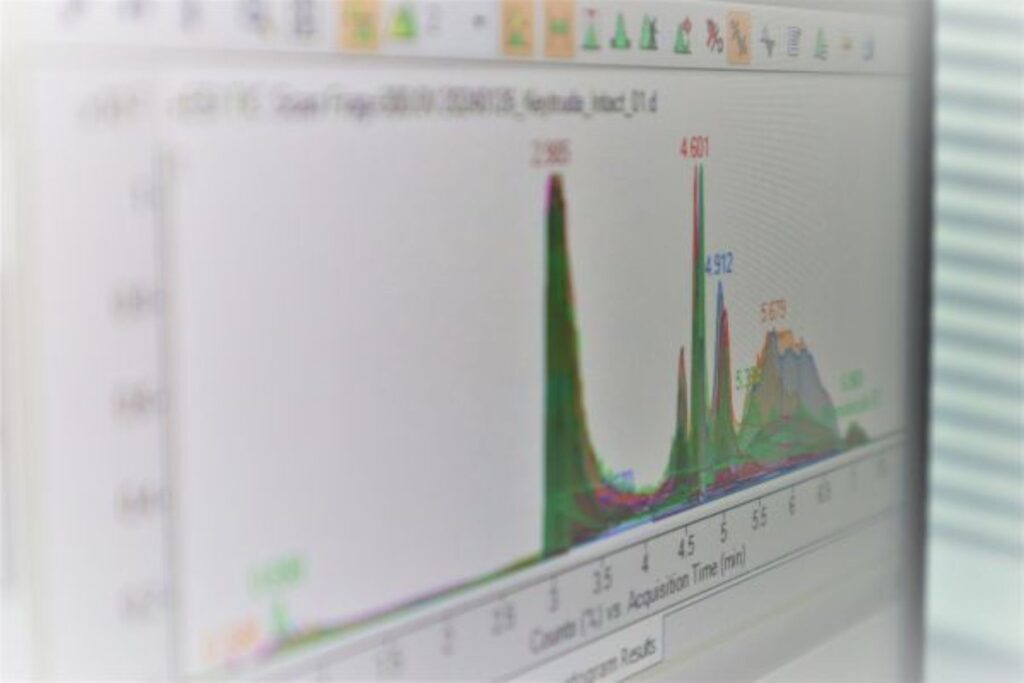
One-Stop LC-MS Pipeline
Our LC-MS Services
Targeted quantification is the right approach when you need to measure the precise concentration of specific, known compounds in your sample. Using our Triple Quadrupole (TQ) instrument, we can detect and quantify drugs, toxins, metabolites, and active compounds at very low concentrations — even in complex biological matrices. This service is commonly used for pharmacokinetic studies, quality control testing, and biomarker validation.
What we quantify
- Drugs, toxins and active compounds
- Metabolites (targeted panels)
- Proteins (via SRM/MRM)
- Residual chemicals and contaminants
- Biomarkers with defined thresholds
What is included
- Method development for novel analytes
- Calibration curve and validation
- High sensitivity across a wide compound range
Untargeted omics analysis is designed for discovery — when you want to understand the full molecular profile of your sample without defining targets in advance. Using our high-resolution QTOF instrument, we detect thousands of features across the metabolome, lipidome, or proteome simultaneously. This is the preferred approach for comparing biological groups, identifying biomarkers, and exploring mechanisms of action in research and early-stage development.
Omics services
- Metabolomics (metabolite ID and profiling)
- Lipidomics
- Proteomics (discovery)
- Peptidomics
- Microbiome metabolite profiling
Analysis outputs
- Full feature detection across the metabolome
- Group comparison and biomarker discovery
- PCA, volcano plots, and heatmaps
- Annotation via HMDB, KEGG, and LipidMaps Add-on — available as additional data analysis upon request
Protein characterization is used when you need detailed structural information about a specific protein — beyond simply identifying that it is present. Our QTOF platform enables accurate intact mass measurement and peptide-level analysis to confirm protein identity, detect post-translational modifications, map disulfide bonds, and characterize glycosylation. This service is particularly valuable for biopharmaceutical development, recombinant protein quality control, and biosimilar comparability studies.
Characterization services
- Intact protein mass analysis
- Subunit mass profiling
- Peptide mapping
- Post-translational modification (PTM) detection
- Glycoprofiling
Applications
- Biopharmaceutical characterization (mAbs, fusion proteins)
- Protein identity confirmation and QC
- Disulfide bond mapping
- Recombinant protein quality control
- Biosimilar comparability studies
Which Instrument Is Right for You?
Triple Quadrupole (TQ)
Agilent LC-6495 · Targeted Analysis
Quadrupole TOF (QTOF)
Agilent LC-6545XT · Untargeted Analysis
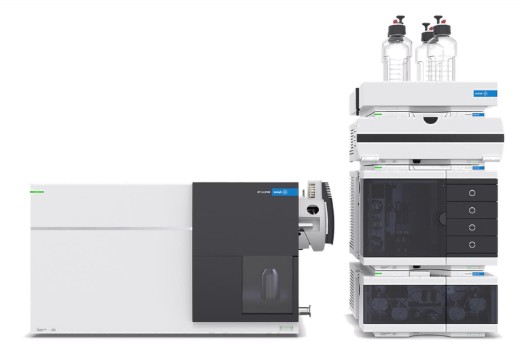
Agilent LC-6495 TQ Machine
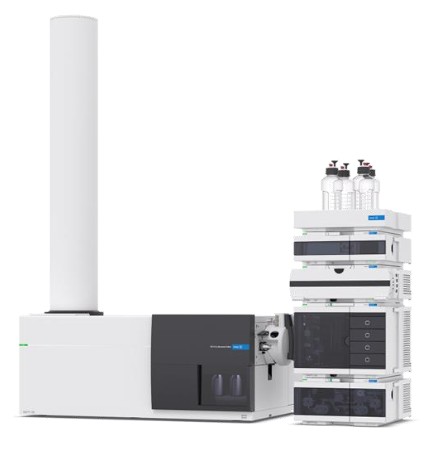
Agilent LC-6545XT QTOF Machine
Sample Types We Work With
Click any segment or legend item to learn more about our experience with that sample type.
Our Analytical Capabilities
Deliverables
Original instrument files plus filtered, normalized datasets ready for downstream analysis.
| Compound ID | Sample 1 | Sample 2 | Control | p-value |
|---|---|---|---|---|
| M134T45 | 12,450 | 11,890 | 6,230 | 0.003 |
| M256T120 | 8,670 | 9,110 | 8,900 | 0.412 |
| M198T88 | 3,200 | 3,450 | 7,800 | 0.001 |
Publication-ready figures including PCA, volcano plots, heatmaps, and ANOVA.
A structured PowerPoint report that walks through every stage of your project — making results clear, traceable, and ready to share with collaborators or include in publications.
Identified or putative compounds with database IDs, confidence levels, and pathway mapping.
| Feature | Name | HMDB ID | Conf. |
|---|---|---|---|
| M146T34 | L-Glutamine | HMDB0000641 | Level 1 |
| M191T67 | Citric acid | HMDB0000094 | Level 1 |
| M253T112 | Putative lipid | — | Level 3 |
For targeted analyses: concentration values per analyte with calibration data and method validation summary.
| Compound | Conc. (ng/mL) | LOD | LOQ |
|---|---|---|---|
| Drug A | 24.3 ± 1.2 | 0.5 | 1.5 |
| Drug B | 8.7 ± 0.4 | 0.1 | 0.3 |
| Metabolite X | 156 ± 8.1 | 5.0 | 15.0 |
Optional walkthrough of results with our in-house scientist. Discuss interpretation, next steps, and publication strategy.
Sample Submission Process
Get in touch
Contact us via the quote form below or by email at [email protected]. Please include a brief description of your project, sample type, and what you are looking to measure or identify.
Receive quote and sample form
We will send you a pre-indicative quote or pricing guide along with a sample submission form to fill in. This allows us to prepare the right protocol for your samples before they arrive.
Send your samples
Once the form is completed, ship your samples to our laboratory by courier — we will provide you with our address and any packaging guidelines to ensure samples arrive in optimal condition.
Turnaround Time
Untargeted analysis, characterization & identification
Standard turnaround from sample receipt to final report delivery. If your project is time-sensitive, expedited processing is available — please note that priority handling carries a priority surcharge.
Projects requiring method development or optimization
Method development and optimization takes approximately 3–4 weeks. Once the method is established, routine sample runs take an additional 1–2 weeks depending on current queue.
All timelines are indicative and subject to current workload. We will always communicate an estimated timeline upon project confirmation.
Common Questions
Below are enquiries we frequently receive from clients, along with our current capabilities for each.
Not Sure Which Service You Need?
Find Your Service — 3 Questions
Answer below and we will recommend the best approach for your project.